
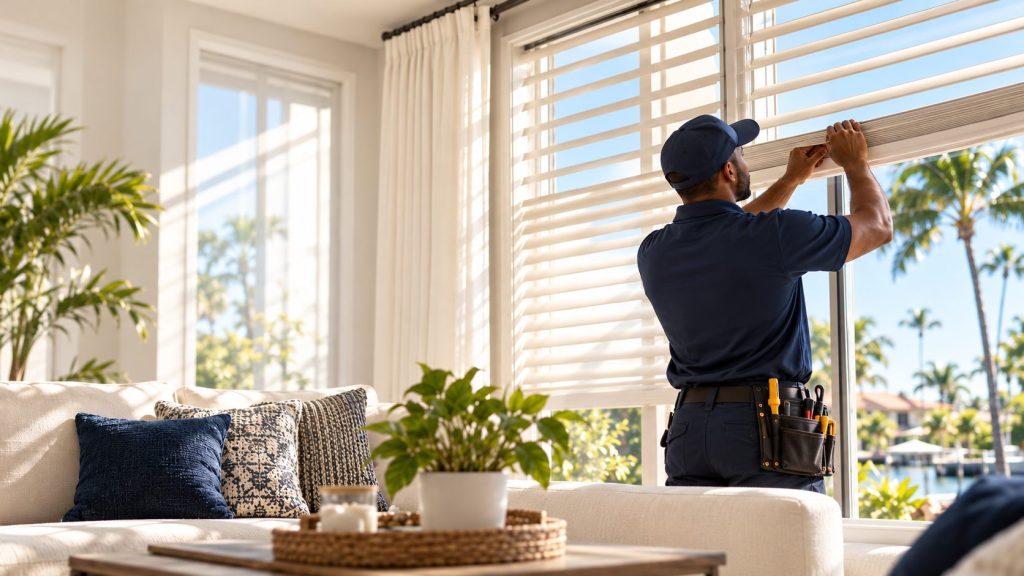
Your roller shade won’t roll up. A blind hangs crooked no matter how you pull the cord. Or the motorized shades you loved on day one just stopped answering the remote. It’s easy to assume you need all-new window treatments. Most of the time, you don’t. So should you repair or replace blinds that stop working? Usually, a repair is the faster and more affordable fix.
In South Florida homes, the fabric or slats usually outlast the parts that move them. A worn clutch, a loose bracket, or a motor that needs reprogramming can make a good shade look broken. Professional blind and shade repair fixes the real problem for a fraction of the cost of replacement.
This guide covers why blinds and shades break in our climate, the problems we fix most often, how motorized shade repair works, and how to decide between repair and replacement. If you already know you need help, you can request a free estimate or call us at (786) 566-9398.
In this guide:
- Quick Answer: Should You Repair or Replace Your Blinds?
- Why Blinds and Shades Break Faster in South Florida
- Common Blind and Shade Repair Problems
- Motorized Shade Repair: Motors, Remotes, and Programming
- Repair or Replace Blinds and Shades: How to Decide
- What to Expect From a Blind and Shade Repair Visit
- DIY Blind Repair vs. Hiring a Pro
- How to Make Your Blinds and Shades Last Longer
- Blind and Shade Repair Across South Florida
- Frequently Asked Questions About Blind and Shade Repair
Quick Answer: Should You Repair or Replace Your Blinds?
Repair your blinds or shades if the fabric, slats, or louvers are still in good shape and the problem is mechanical: a cord, clutch, bracket, spring, or motor. Replace them if the material is sun-faded, brittle, warped, or cracked, or if you want a different style or better light control. A trained technician can tell you which makes sense in a single visit.
Why Blinds and Shades Break Faster in South Florida
Window treatments in Miami-Dade, Broward, and Palm Beach work harder than almost anywhere else in the country. Our climate puts steady stress on every part of a blind or shade.
Intense, Year-Round Sun
South Florida gets strong UV exposure twelve months a year. Over time, sunlight breaks down plastic components like clutches, end caps, and cord guides. As a result, they become brittle and crack. The same UV that fades fabric also weakens the small parts you never see.
Heat and Humidity
High humidity can cause wood blinds to warp and fabric shades to sag or stretch. Heat build-up between the glass and the shade adds to the strain. Metal parts like springs and brackets can corrode faster in salty, humid coastal air, especially in homes near the water.
Daily Use (and Overuse)
Shades in living rooms and bedrooms go up and down once or twice a day, every day. That adds up to hundreds of cycles a year. Eventually, cords fray, clutches wear, and tension springs lose strength. Pulling a cord at an angle or yanking a stuck shade speeds up the damage.
Moves, Remodels, and New Windows
Many repair calls start with a change to the home. Impact window upgrades, a renovation, or a move can leave treatments that no longer fit the opening. Brackets get reused in the wrong spot, or shades are cut down incorrectly. A pro can resize and remount them instead of starting over.
Snowbird Homes Sitting Empty
Seasonal homes often sit closed up for months. When owners return, they find shades stuck in place, motors that won’t respond, or batteries that have died. Our snowbird season guide covers how to get your window treatments ready before you arrive.
Common Blind and Shade Repair Problems
Most window treatment issues fall into a handful of categories. Here’s what we see most often in South Florida homes, and what usually causes each one.
Roller Shades That Roll Unevenly or Drift to One Side
When a roller shade telescopes or tracks to one side, the fabric can fray along the edge or bunch at the tube. Common causes include a tube that’s out of level, a bracket that has shifted, or fabric that has stretched from heat. We re-level the shade, adjust the brackets, and correct the tracking so it rolls straight.
Shades That Won’t Stay Up or Slowly Drop
A shade that creeps down on its own usually has a worn clutch or a spring that has lost tension. On cordless shades, the internal spring motor may need re-tensioning or replacement. This is one of the most common and affordable repairs we do.
Stuck, Jammed, or Hard-to-Pull Shades
If you have to fight your shade to raise it, something inside is binding. It may be a cracked clutch, a cord that has jumped its track, or debris in the mechanism. Forcing it often breaks more parts, so stop pulling and have it checked.
Frayed, Broken, or Tangled Cords
Lift cords and bead chains wear out over time, especially in sunny windows. We replace cords and chains and restring blinds so they lift evenly. If you have young children or pets, we can also talk through cordless and motorized options for added safety. The Window Covering Safety Council recommends cordless window coverings in homes with young children.
Loose, Bent, or Broken Mounting Brackets
After all, brackets hold the entire weight of the treatment. When screws loosen or brackets bend, shades hang crooked or fall out entirely. We re-secure brackets into solid material and replace damaged hardware.
Zebra Blinds That Won’t Align
Zebra blinds rely on two fabric layers lining up correctly. If the bands no longer match, or the shade won’t stop at the open or closed position, the bottom rail or stop settings may need adjusting.
Broken Slats, Vanes, and Louvers
A few cracked slats don’t mean the whole blind is done. In many cases we can replace individual slats or vanes. For plantation shutters, we can adjust louver tension so they hold their position again.
Treatments That No Longer Fit
New impact windows, a remodel, or a move can leave you with shades that are too wide or too long. Our team can resize and adjust many window treatments so you can keep the ones you already paid for.
Motorized Shade Repair: Motors, Remotes, and Programming
Motorized shades are one of the most popular upgrades in South Florida homes. They make it easy to control heat and glare on large windows and sliding glass doors. But like any electronic system, they need occasional service.
Signs Your Motorized Shade Needs Repair
- The shade doesn’t respond to the remote, wall switch, or app
- It stops at the wrong height or won’t go fully up or down
- Several shades that used to move together are now out of sync
- The motor hums, clicks, or strains but the shade doesn’t move
- Scheduled open and close times have stopped working
- The shade moves on its own or reverses direction
What We Can Fix
Limit setting. Every motor has an upper and lower stop point, called limits. Power outages, storms, and battery changes can knock those limits out of place. Fortunately, resetting them is often all it takes to get the shade stopping in the right spot again.
Remote and app programming. Remotes can lose their pairing, and new phones or Wi-Fi routers can break app connections. We re-pair remotes, regroup shades into rooms or zones, and restore schedules.
Battery and power issues. Battery-powered motors need recharging or new batteries. Hardwired motors can be affected by power surges, which are common during summer storm season. We check power first before replacing anything.
Motor replacement. When a motor has truly failed, we can replace it and keep your existing fabric, tube, and brackets. In most cases, that costs far less than buying a whole new motorized shade.
Converting manual shades. If your shades work fine but you’re tired of cords, ask about adding motors. Learn more on our motorized services page.
Quick Checks Before You Call
Before scheduling a visit, try these simple steps:
- Replace or recharge the batteries in the remote and, if applicable, the shade motor.
- Make sure you’re on the correct channel on a multi-channel remote.
- Check the breaker or outlet for hardwired shades.
- Restart your smart home hub or Wi-Fi router if you use an app.
If the shade still won’t respond, it’s time for a professional diagnosis. Opening the motor housing yourself can void a warranty or damage the wiring.
Repair or Replace Blinds and Shades: How to Decide
When deciding whether to repair or replace blinds, the right choice comes down to the condition of the material, the age of the system, and what you want from your windows going forward. Use this side-by-side to guide the decision.
| Situation | Repair Is Usually Better | Replacement Is Usually Better |
|---|---|---|
| Fabric or slats | Clean, intact, good color | Faded, brittle, cracked, or stained |
| The problem | Cord, clutch, spring, bracket, or motor | Damage across most of the material |
| Age | Still a newer, quality product | Old system with hard-to-find parts |
| Fit | Needs resizing or remounting | Wrong size for new windows and can’t be cut down |
| Your goals | Happy with the look and light control | Want blackout, motorization, or a new style |
When Repair Makes the Most Sense
Repair is the smart move when your treatments are high quality and the issue is mechanical. After all, custom shades and shutters are an investment. Replacing one small part to save a custom shade is almost always worth it. Repair is also great for matching sets. If one shade in a row of five fails, fixing it keeps the room looking consistent.
When Replacement Is the Better Value
South Florida sun is tough on materials. After many years, fabric can fade unevenly, vinyl can yellow, and wood can warp. If several shades in the home are failing at once, replacing them together may cost less than repeated service calls. In addition, replacement is the right time to upgrade, whether that means cordless lifts, blackout fabric for bedrooms, or full motorization.
If you’re leaning toward new treatments, compare your choices on our window treatment services page or read our guide to the best window treatments for Florida homes. When you’re ready, our team handles professional blinds and shades installation from measurement to final adjustment.
Our Honest-Recommendation Promise
We don’t push replacement when a repair will do. Our technicians explain what’s wrong, show you the worn part when possible, and give you clear options. You decide what’s right for your home and budget.
What to Expect From a Blind and Shade Repair Visit
Our repair process is simple and built around your schedule.
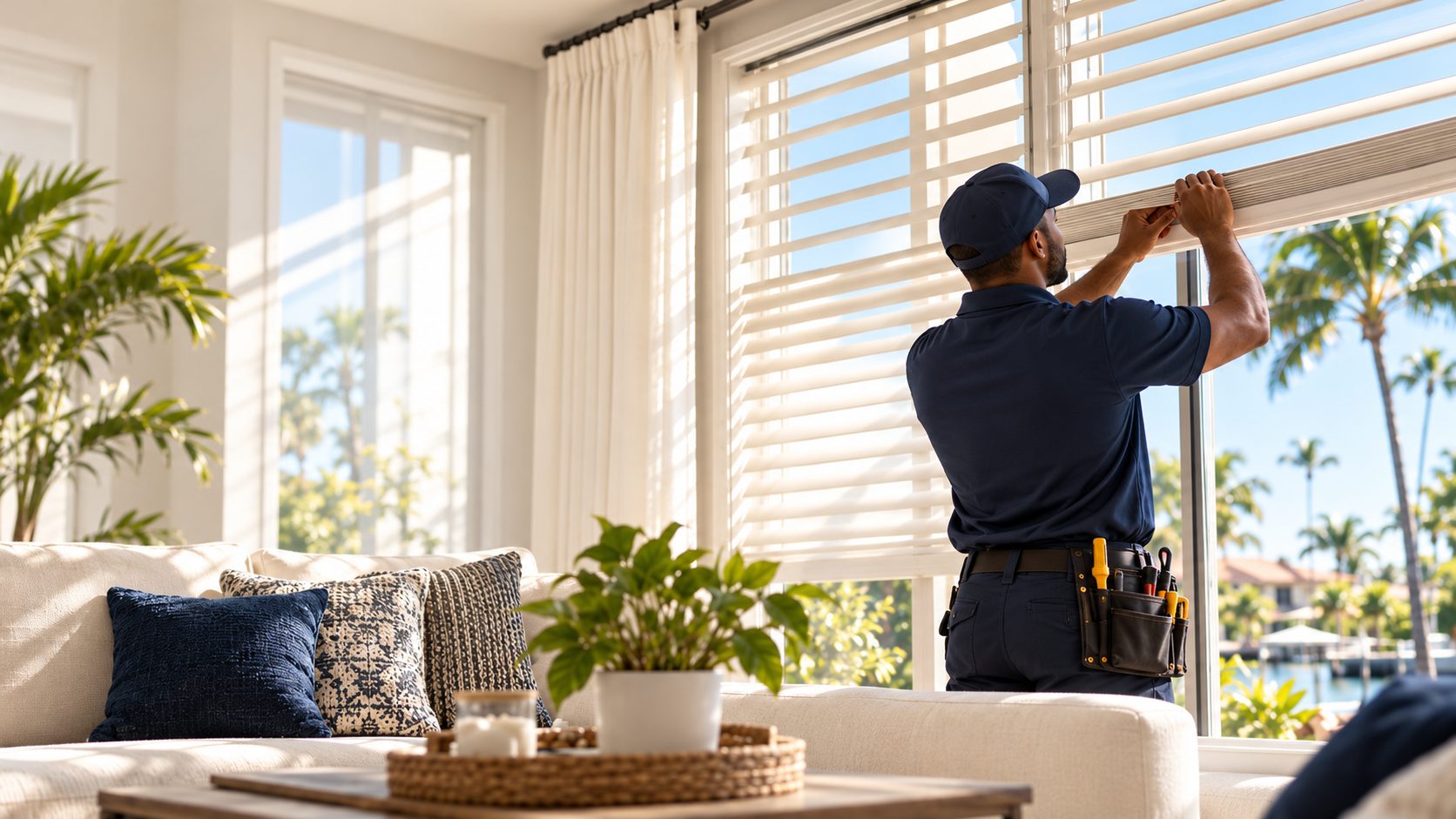
- Tell us what’s wrong. Call (786) 566-9398 or send us a request. Photos or a short video of the problem help us come prepared.
- In-home diagnosis. A technician inspects the shade, blind, or motor and finds the root cause, not just the symptom.
- Clear options. We explain whether a repair, adjustment, part replacement, or full replacement makes the most sense.
- The fix. Many repairs, like re-leveling, bracket work, limit resets, and reprogramming, can be handled during the visit. Special-order parts or motors may need a return trip.
- Testing and walkthrough. We run every repaired treatment through full cycles and show you how to operate and care for it.
DIY Blind Repair vs. Hiring a Pro
Some fixes are safe to try at home. Tightening a loose screw, replacing remote batteries, or cleaning dust out of a track is fair game. Other repairs are better left to a professional.
Call a pro when:
- The shade is large, heavy, or mounted high above a staircase or two-story window
- The problem involves a spring-loaded tube or tension system, which can release suddenly
- A motor, wiring, or smart home integration is involved
- The shade is under warranty and a DIY attempt could void it
- You’ve tried a fix and the problem came back
A professional repair also gets the job done right the first time. Window treatment parts are often specific to the brand and model. A technician who works with these systems every day can identify the right part quickly and avoid the trial and error that damages shades.
More Services While We’re There
Many homeowners bundle repairs with other projects. While we’re on site, we can also help with curtain track installation, custom drapery, or window cleaning and TV mounting. One visit, one trusted team.
How to Make Your Blinds and Shades Last Longer
A little care goes a long way in our climate. These habits help prevent many of the repairs we see.
- Pull cords straight down. Pulling at an angle wears out cord guides and clutches.
- Don’t force a stuck shade. Stop, check for obstructions, and call for help if it won’t move freely.
- Dust regularly. Use a soft brush or vacuum attachment to keep grit out of tracks and mechanisms.
- Use UV protection. Window film or light-filtering fabrics reduce sun damage to both materials and parts.
- Keep motors charged. Recharge battery motors on a schedule, and use surge protection for hardwired systems.
- Prep before you leave for the season. Lower shades partway to protect furniture, and check motors and batteries before you go.
- Schedule a check-up. A quick professional inspection every few years catches small issues before they become big ones.
Blind and Shade Repair Across South Florida
Quality Blinds Solutions provides blind and shade repair for homes and businesses throughout Miami-Dade, Broward, and Palm Beach counties. That includes communities like Miami, Fort Lauderdale, Hollywood, Pembroke Pines, Weston, Coral Springs, Boca Raton, Delray Beach, and West Palm Beach. Whether you need to repair or replace blinds in a condo, single-family home, or office, we can help. See the full list on our areas we serve page.
Want to see our work first? Browse recent installations in our project gallery, or learn more about our team.
Frequently Asked Questions About Blind and Shade Repair
Can you repair motorized shades?
Yes. We reset motor limits, reprogram remotes and schedules, troubleshoot power problems, and replace failed motors while keeping your existing fabric and hardware when possible.
Can you repair blinds or shades you didn’t install?
In most cases, yes. We work on a wide range of blinds, shades, and shutters, no matter where they were purchased. If a part is brand-specific, we’ll let you know your options.
Can blinds and shades be resized?
Many can. Roller shades, some cellular shades, and certain blinds can be cut down or adjusted to fit a new window. We’ll measure and tell you whether resizing or replacement is the better fit.
Should I repair or replace older blinds?
It depends on the material. If the fabric or slats are in good condition, repair is usually worth it. If they’re faded, brittle, or warped from years of sun, replacement often delivers better value.
How long does a blind or shade repair take?
Many repairs, such as adjustments, bracket work, and reprogramming, are completed in a single visit. Repairs that need special-order parts or motors may require a second visit.
Do you offer free estimates?
Yes. We offer free in-home estimates and measurements throughout Miami-Dade, Broward, and Palm Beach counties.
Schedule Your Blind and Shade Repair Today
Not sure whether to repair or replace blinds in your home? Don’t live with a crooked blind or a shade that won’t move. In many cases, a quick, affordable repair brings your window treatments back to life. Our team will diagnose the problem and give you an honest recommendation.
Call (786) 566-9398 or request your free estimate to schedule a visit. Learn more about our full blind and shade repair services.
Related reading: Solar Shades vs. Blackout Shades: Which Is Right for Your South Florida Home?